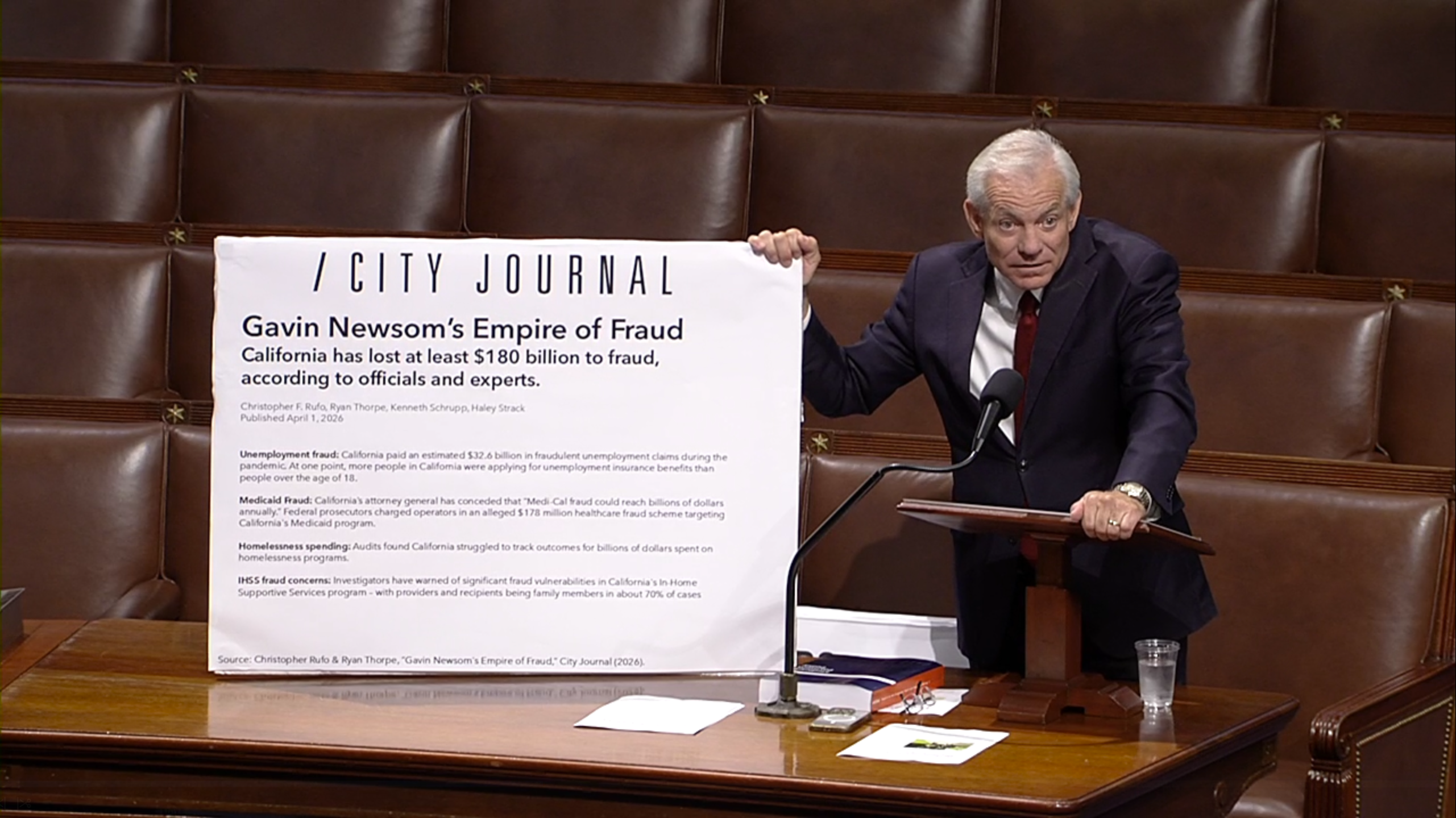
U.S. Rep. David Schweikert used House floor remarks last week to make the case that Washington is fighting fraud too late.
“The fraudulent checks should never go out the door,” Schweikert said.
Schweikert said the current model is backward. Federal programs pay claims first, find the fraud years later, recover little of the money and then call the indictment a victory. By then, taxpayers have already lost. In some cases, vulnerable people have been hurt far beyond the dollars.
The Arizona sober living scandal was the clearest example. Schweikert described people from the Navajo Nation being recruited into vans, taken to Phoenix, placed in sober living homes and billed through Medicaid. When the benefit ran out, some were thrown out or moved to another home.
Friends on the Navajo Nation have told him they still cannot find family members.
“This is beyond the fraud of stealing $2.8 billion,” Schweikert said. “There’s people who’ve died. People have lost their lives because of how criminal this was. And it went on for a decade. How?”
Schweikert said the warning signs should not take a decade to find. A health care fraud expert told his office that an off-the-shelf data system costing about $1,500 a month could have flagged the Arizona sober living scheme by catching mismatched addresses, mismatched Social Security numbers and repeated billing patterns.
That same discipline already exists elsewhere. Credit card companies flag suspicious charges in real time. Treasury has saved more than $11 billion through a system designed to stop improper payments. More than 20 years ago, as Maricopa County treasurer, Schweikert used a basic matching process to stop checks when the payment information did not line up.
“When they didn’t match, we didn’t pay,” he said.
Schweikert said that is the approach Washington should apply across federal programs before taxpayer money disappears.
He also warned that some of the biggest losses are protected because people make money from the broken system. On duplicate medical scans, which his office estimates could cost taxpayers $25 billion to $35 billion, Schweikert said patients should be able to carry an MRI, CT scan, ultrasound or X-ray from one doctor to the next so the same test does not have to be ordered again.
Lobbyists have fought the idea, he said, because repeat scans are profitable.
“The duplicate scans are their business model,” Schweikert said.
The same problem shows up in Medicare, Medicaid, hospice care, Medicare Advantage and student loans. Some fraud comes from stolen identities or overseas schemes. Schweikert said some of the larger losses come from program designs and billing systems that keep sending money out even when the warning signs are obvious.
“A number of the things you would consider fraud, I consider fraud,” Schweikert said. “There’s lobbyists outside this hallway. It’s their client’s business model.”
Schweikert tied the fraud fight to the country’s larger fiscal pressure. The federal government is borrowing billions each day. Medicare’s trust fund is projected to be depleted in a little over six years. Social Security faces a 24% cut under current law.
Congress will have to earn public trust before asking Americans to accept hard choices on debt, deficits and demographics, Schweikert said. That starts with proving government can stop obvious fraud in the programs already on the books.
“We need the public to believe we have finally woken up and become great stewards of their money,” Schweikert said.