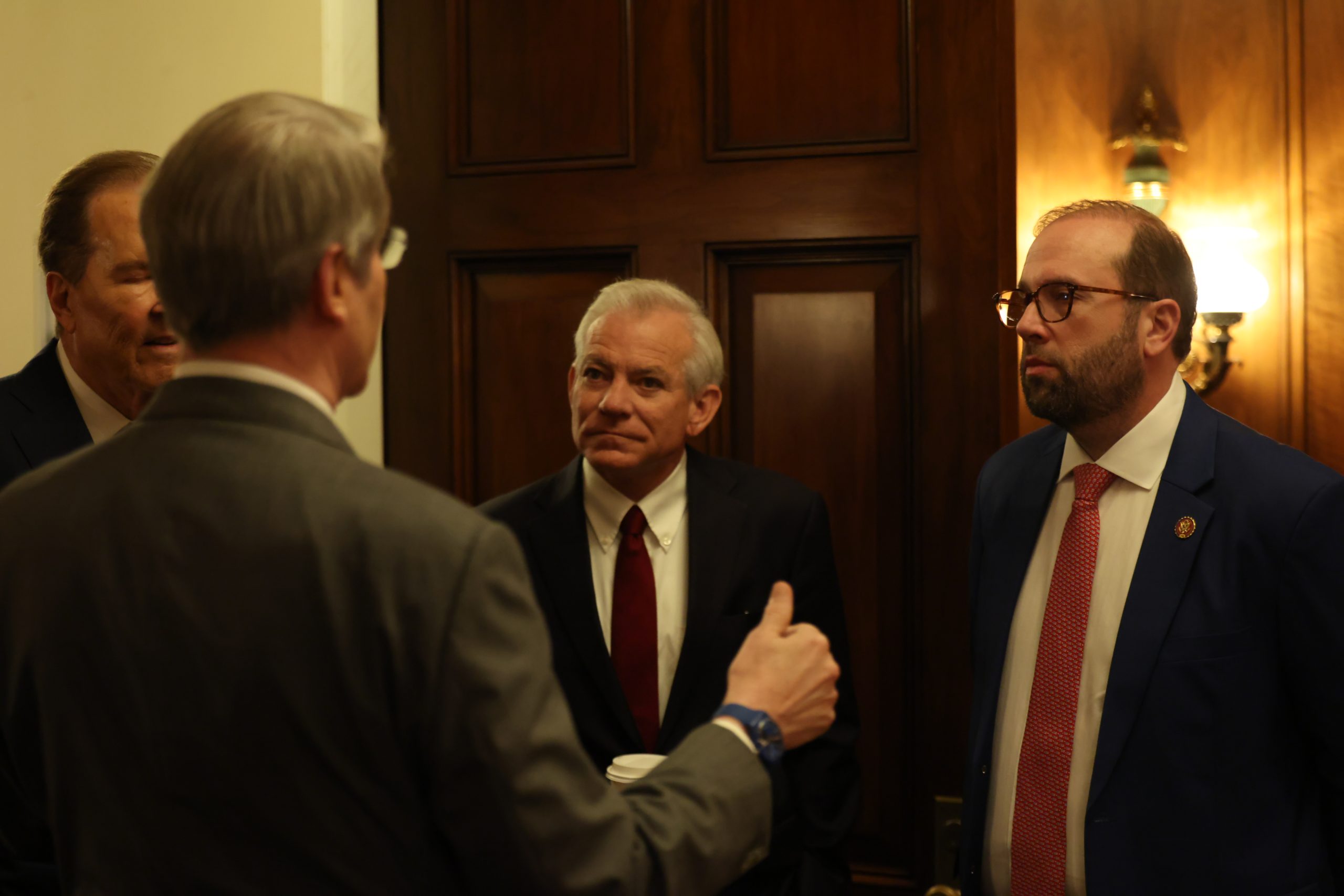
WASHINGTON — U.S. Rep. David Schweikert, R-Ariz., questioned Treasury Secretary Scott Bessent during a House Ways and Means Committee hearing on the Treasury Department’s priorities.
Schweikert raised concerns about the size of the tax-exempt sector and the need for clearer reporting on whether tax-exempt organizations are meeting their public obligations.
“We calculate about 17% of the U.S. economy now is in the tax-exempt space,” Schweikert said. “And within that space, those who received the benefit of tax exemption, the basic concept is here’s the community good you’re doing for not having to pay taxes.”
Schweikert asked whether Treasury and the IRS could develop a more robust Form 990 process so Congress and the public can better understand the community benefit provided by tax-exempt organizations.
“Is there a way to come up with a much more robust universal form so we can understand, are these tax-exempt organizations meeting their societal obligation?” Schweikert asked. “And if they’re not, we can help them meet that. But we don’t have enough information today.”
Bessent said the question was important, especially for large tax-exempt organizations such as hospitals and health care services. He also discussed recent IRS guidance related to Form 990 and nonprofit grantmaking.
“The IRS has issued guidance for Form 990 that nonprofits, just as banks must KYC, know your customer, we are telling the directors of these foundations, of these institutions, you must know your grantee,” Bessent said. “If the money is being used for violent activities, you as a trustee, as a fiduciary are in trouble. If it is being used to take away people’s civil rights, you are in trouble and the nonprofit status is in jeopardy.”
Schweikert also questioned Bessent on debt management and the need to maintain confidence in U.S. Treasury markets.
“We’re responsible as policymakers for the debt, not the administration,” Schweikert said. “We do make the policy.”
Schweikert warned that Congress must take the risk of stressed debt auctions seriously as governments around the world continue borrowing heavily.
“I do have some concerns of in the future where the entire world is binging on debt that we have some stressed auctions,” Schweikert said. “What do we do as a country to actually not have that happen to us?”
Bessent said the U.S. Treasury market has performed well, but warned that confidence cannot be taken for granted.
“What we must let our borrowers know, people who are buying Treasury bonds, whether it is U.S. households, the foreign central banks and everyone else in between, is that we are serious about getting our debt and deficit numbers under control,” Bessent said.